TON blockchain
Hackathon
Working with TON blockchain ecosystem
05.11.2025
What is TON?
TON (The Open Network) is a high-performance Layer-1 blockchain designed for speed, scalability, and mass adoption. Originally initiated by Telegram, it has evolved into an independent, community-driven blockchain ecosystem.
What makes TON particularly powerful for community-based applications?
- Fast and low-cost transactions: ideal for micro-payments and time-based rewards
- Native NFT support: making badge systems and digital ownership seamless
- TON Connect integration: allowing users to link wallets easily inside apps
- Deep Telegram integration: enabling blockchain features directly within Telegram’s ecosystem.
Unlike many blockchains that feel detached from everyday users, TON is embedded inside Telegram’s 800M+ user base. That makes it uniquely positioned to bring Web3 functionality to mainstream communities without forcing users to leave the platforms they already use.
Building "Neighbourly"

The idea started with a simple observation:
People want to help their neighbours, but often lack the structure, incentives, or opportunity to do so.
Across residential buildings, co-working spaces, freelancer circles, and even online groups, there’s untapped goodwill. Skills are everywhere. Willingness is there. But coordination is missing, that’s where Neighbourly was born.
Neighbourly is a time-banking decentralized app designed to make helping others measurable, rewarding, and verifiable. All inside Telegram and powered by TON.
The core idea is simple:
You help someone → You earn TimeTons
You need help → You spend TimeTons
Time becomes the currency, instead of money, community members exchange hours. A designer could help with branding. A developer could fix a website. Someone could help move furniture. A language tutor could offer lessons.
Every contribution is recorded, rewarded, and verified on-chain.
App's Main Elements
Community & Platform Context
Community model: supports residential, co-working, freelancer, and virtual communities.
Telegram ecosystem integration: works through a Telegram bot + mini app flow for social interaction, task visibility, and peer engagement.
2. Value Exchange (Time Banking)
Time-banking system: users receive and spend TimeTons for community help.
Contribution rewards: people who help others earn TimeTons based on contributed hours.
Wallet connection: connects to TON wallets for handling tokens and digital assets.
3. Trust, Motivation & Rewards
NFT badge system (3 tiers):
Neighbour (entry level)
Buddy (10+ hours/month)
Angel (18+ hours/month)
Badge system purpose (incentive design): badges are meant to encourage users to contribute more time. As verified help hours increase, users move to higher tiers.
Perk access in return: higher badge tiers unlock better benefits such as exclusive events, extra facility access, shared courses, sponsor gifts, and other community rewards.
Annual badge reset: badges renew yearly to keep participation active and ongoing.
4. Growth & Monetization
Paid tasks and engagement mechanics: referral actions (e.g., invite a friend), sponsor participation campaigns, and Telegram-based community tasks.
Growth direction: referrals, competitions, sponsored tasks, brand collaborations, and future NFT auctions tied to communities.
What I Built During the Hackathon
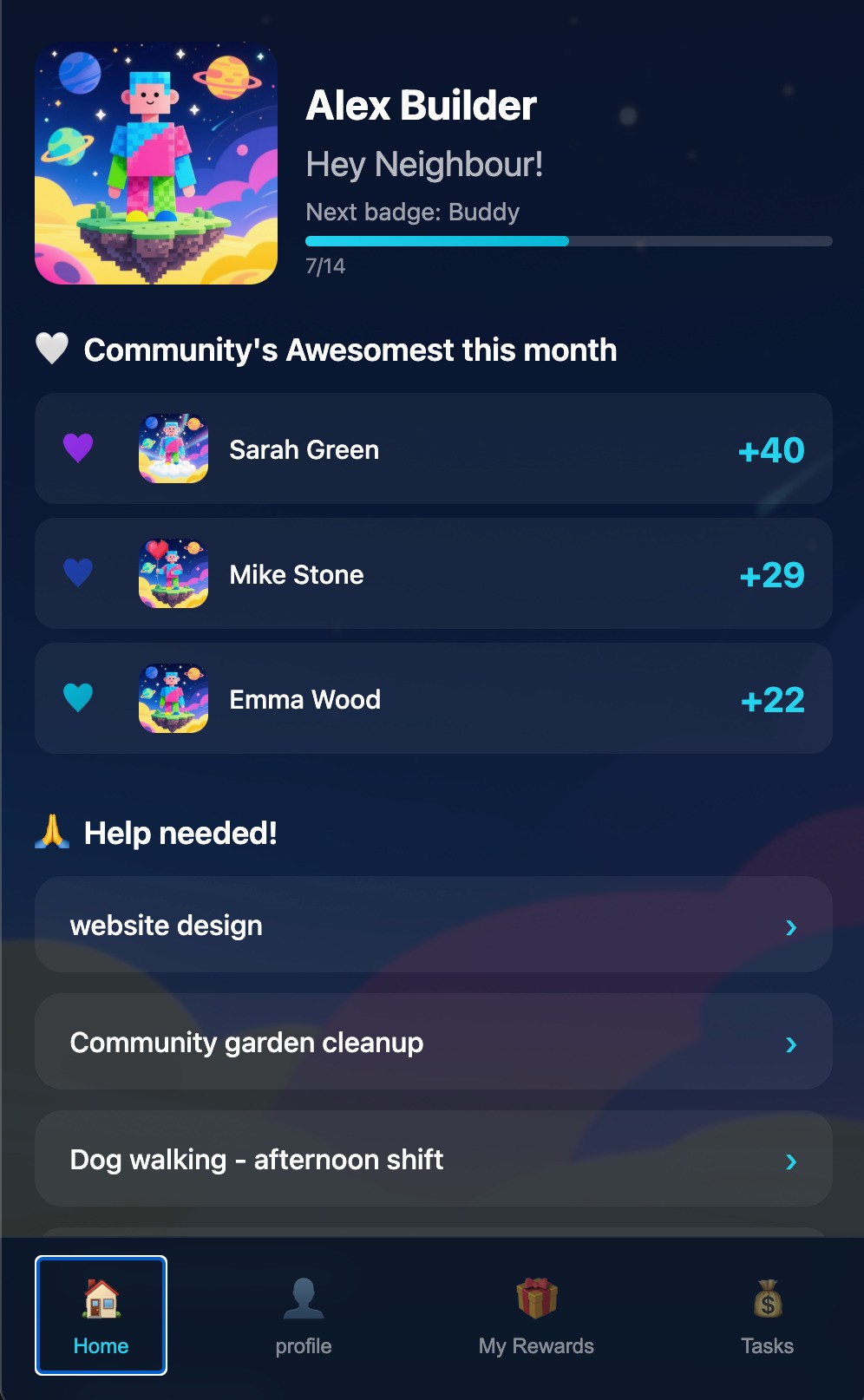
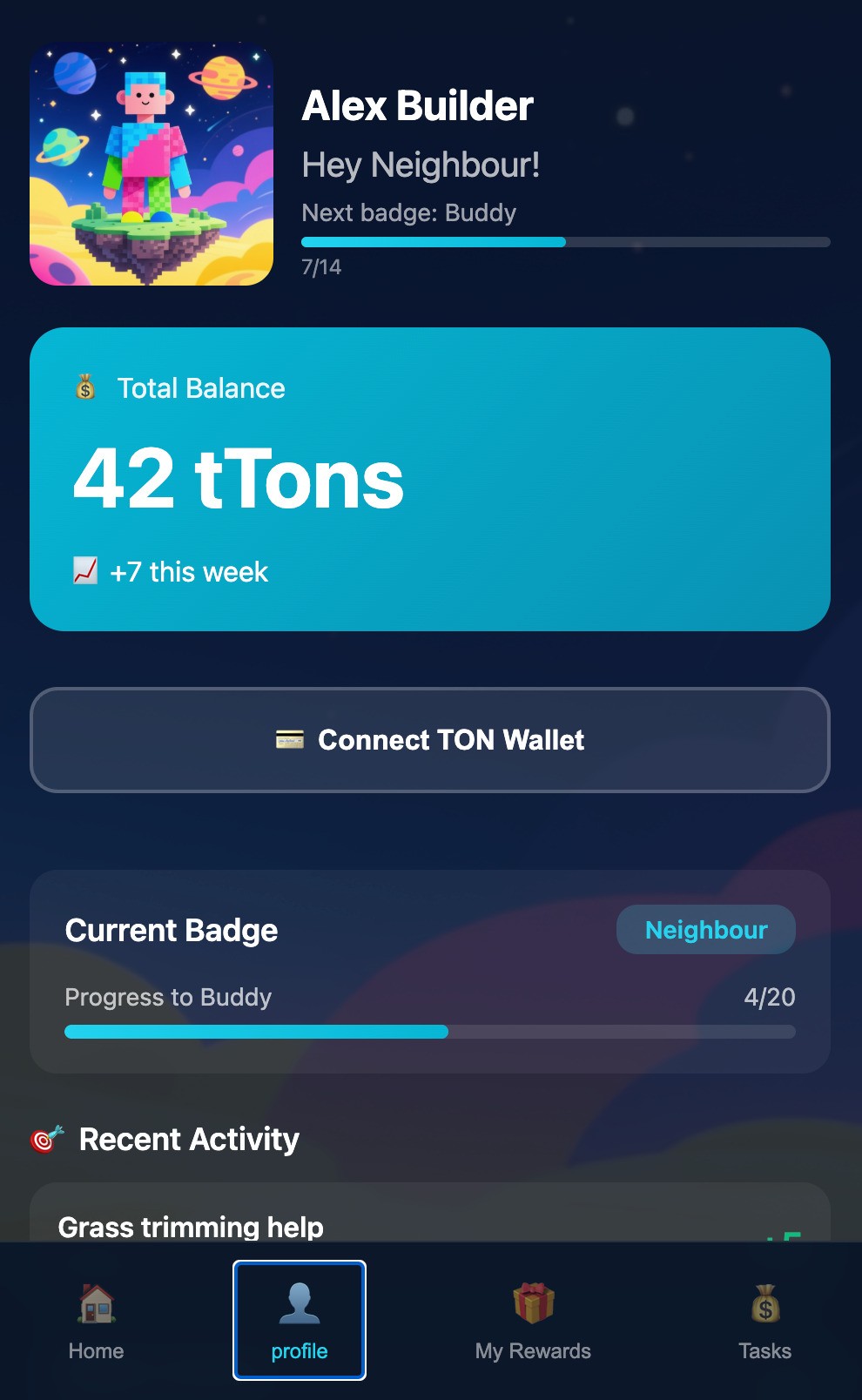
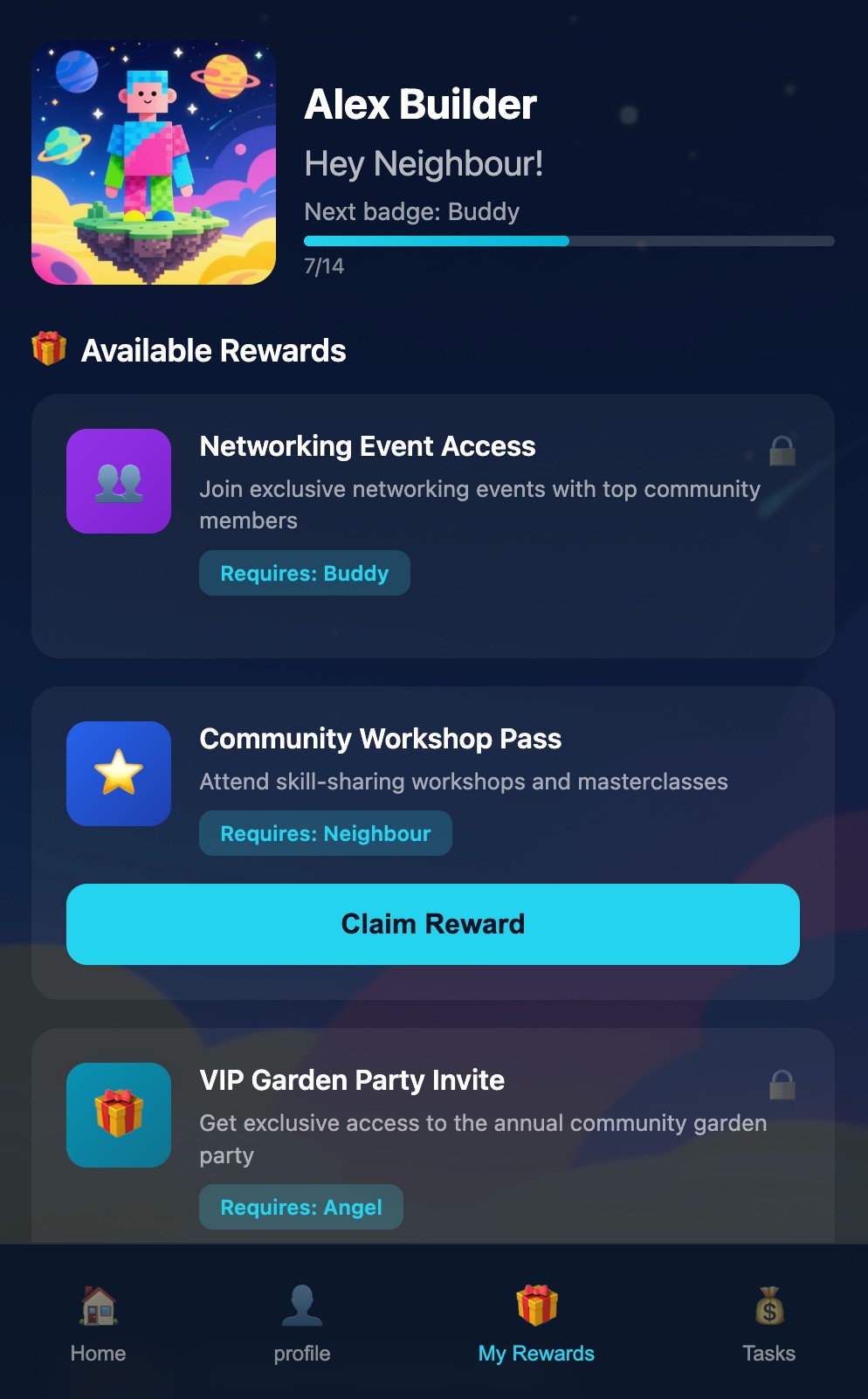
NFT collection
3 working NFT badge tiers
Telegram bot
Telegram Mini App
Wallet linking demo
Skeleton for tasks, rewards, and chore logic
Deployed frontend demo
Why TON and Telegram?
Building on TON made perfect sense:
Fast, low-cost transactions
Native NFT support
Seamless wallet integration
Tight integration with Telegram
Telegram isn’t just a messaging app, it’s already where communities live. Groups, channels, bots, and Mini Apps create a ready-made social layer.
By combining:
TON Connect
Telegram Mini Apps
NFT badges
Wallet integration
Neighbourly becomes both social and trustless.
Final Thoughts
Building Neighbourly clarified how TON and Telegram actually fit together in practice.
Telegram Mini Apps are essentially constrained web apps running inside Telegram’s WebView. You build them like any frontend app, but you must design around limited viewport control, Telegram’s init data for authentication, and mobile-first performance. The real work isn’t UI , rather it’s handling identity, session state, and frictionless interaction inside a social container.
On the TON side, wallet integration via TON Connect makes UX decisions critical. Transactions must be minimal and intentional, and blockchain logic has to feel invisible if you want users to engage in small, repeated actions like time-based rewards.
The biggest shift was thinking of NFTs not as collectibles, but as logic, verifiable contribution, access control, and tiered reputation. Combined with Telegram’s built-in distribution layer (groups, referrals, bots), the stack makes it possible to embed Web3 mechanics directly inside existing communities rather than forcing users into standalone dApps.
© 2026 Khaldoun Alhanawi. All rights reserved.